
When Time, Distance, and Trust Save Lives
Firearm suicide accounts for roughly six in ten firearm deaths in the United States. To make matters worse, unlike firearm homicide, the trend line is moving the wrong way. The Fund for a Safer Future invests in the people and programs proving it’s possible to reduce the risk of fatal outcomes. Suicidal crises are not always predictable and can escalate quickly, sometimes in as little as 10 minutes. Because suicide attempts by firearm are most often fatal, putting time and distance between a person in crisis and a firearm can save a life.
I love guns, God, and Crook County. But I just keep losing friends. I don’t know what to do because there isn’t anywhere to go to get help.
— RURAL OREGON GUN OWNER
Alliance for a Safe Oregon focus group
Why This Work Matters Now
Firearm suicide prevention has never lacked dedicated people working on the issue. It has lacked connection between them. Researchers, gun shop owners, veterans, clinicians, faith leaders, and gun violence prevention advocates have long done this work in parallel, rarely in the same room.
FSF is working to change that. We’re bringing the full coalition together, asking the hard questions, funding the research, learning what actually works, and sharing that knowledge with the people who can use it. Our June 2026 convening in Bend, Oregon — nine firearm suicide prevention grantees alongside leading researchers from Oregon State University, University of Colorado, and Rutgers University, and a group of funders spanning the full range of the gun debate — was one example of how that works in practice. What emerged was common ground, built around these methods rather than politics:
- Secure storage is the most durable shared message between gun-rights and gun-violence-prevention groups.
- Point-of-sale programs like Oregon’s Safer Home Boxes show 78% of recipients reporting changed firearm storage habits six months later.
- Lethal-means curricula built for concealed-carry instructors, health practitioners, gun stores, and gun rangers (to name a few) are spreading across the country, carried forward by the instructors themselves.
- Credible, identity-matched messengers — veterans talking to veterans, gun owners talking to gun owners — are consistently more trusted than researchers and clinicians.
While the field is making progress, there are still many gaps in firearm suicide prevention research. Research takes an average of 17 years to reach practice — a period over which hundreds of thousands of people could die by firearm suicide. That is why FSF funds not just the research, but its application in real world settings.
Voice from the Field
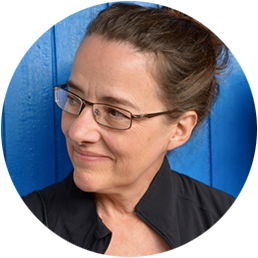
“It’s not just about training mental health providers. Train anyone who sees people at their lowest — defense lawyers, divorce mediators, eviction servers…They can pass along how to get help if suicide is a concern and mention not keeping guns accessible for now so a suicidal crisis doesn’t prove fatal.”
— CATHERINE BARBER, MPA
Harvard Injury Control Research Center
Lethal-means safety is not about taking a side in the gun debate. It is about helping people in crisis survive. Barber’s point anchors what the data shows: only 17 percent of patients report ever being asked about firearm access by a healthcare provider — and the people most at risk rarely come into contact with a healthcare provider at all. With additional funding, the professionals who already see people at their lowest could be trained to help them opt to get a firearm out of reach at exactly the moment it matters most.
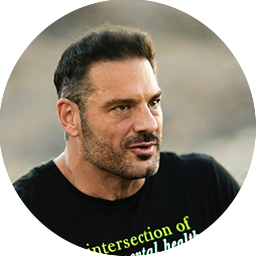
“I’m not going to let the fact that someone believes they’re doing good for the country get in the way of working with them to save a life. We can shelve how we feel about red-flag laws and keep working on everything else.”
— MICHAEL SODINI
Walk the Talk America
Sodini works from inside gun culture and does not support red-flag laws, while many FSF grantees do. At our convening in Bend, that disagreement did not stop the collaboration. FSF holds the same posture — naming the tension rather than smoothing it over, and leading with shared ground.
Beyond Grantmaking
FSF’s support goes beyond writing checks. Through convenings, cross-grantee collaboration, and honest reckoning with work still to do, we help turn parallel efforts into shared strategy by:
- Scaling programs already proven to work, rather than starting over.
- Working to make secure storage affordable and available at the point of sale.
- Increasing voluntary out-of-home storage options.
- Investing in dissemination and science communication, not just more research.
- Building the data infrastructure to identify and reach those at highest risk.
Science communication is an essential part of suicide prevention because research can only save lives when it reaches the people, communities, and systems that can act on it. Our responsibility as researchers is not just to generate evidence, but to translate it into information people can understand and use.
— DR. ALLIE BOND, Ph.D.
Rutgers University, The New Jersey Gun Violence Research Center
Join FSF. Support Firearm Suicide Prevention.
The grantees featured here are ready for more investment — engines already running, needing only more fuel to go faster. With additional philanthropic partnership, we can reach the people at highest risk before a crisis becomes irreversible.
We’re not asking funders to buy into our playbook. We’re asking them to help us build one.
— ROB WILCOX, EXECUTIVE DIRECTOR
President & Chief Executive Officer, Fund for a Safer Future